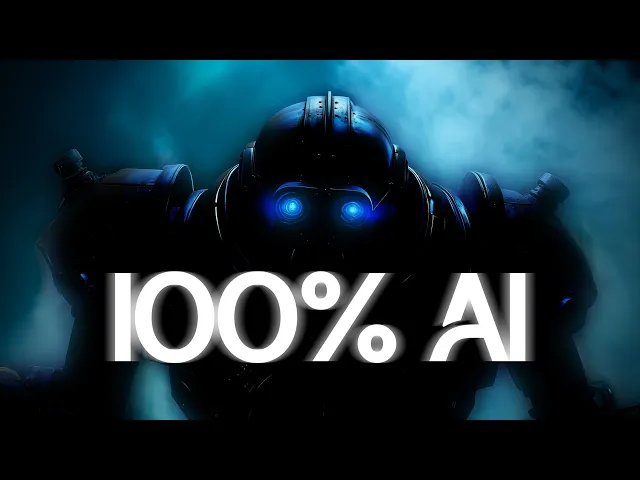
The Final Encounter
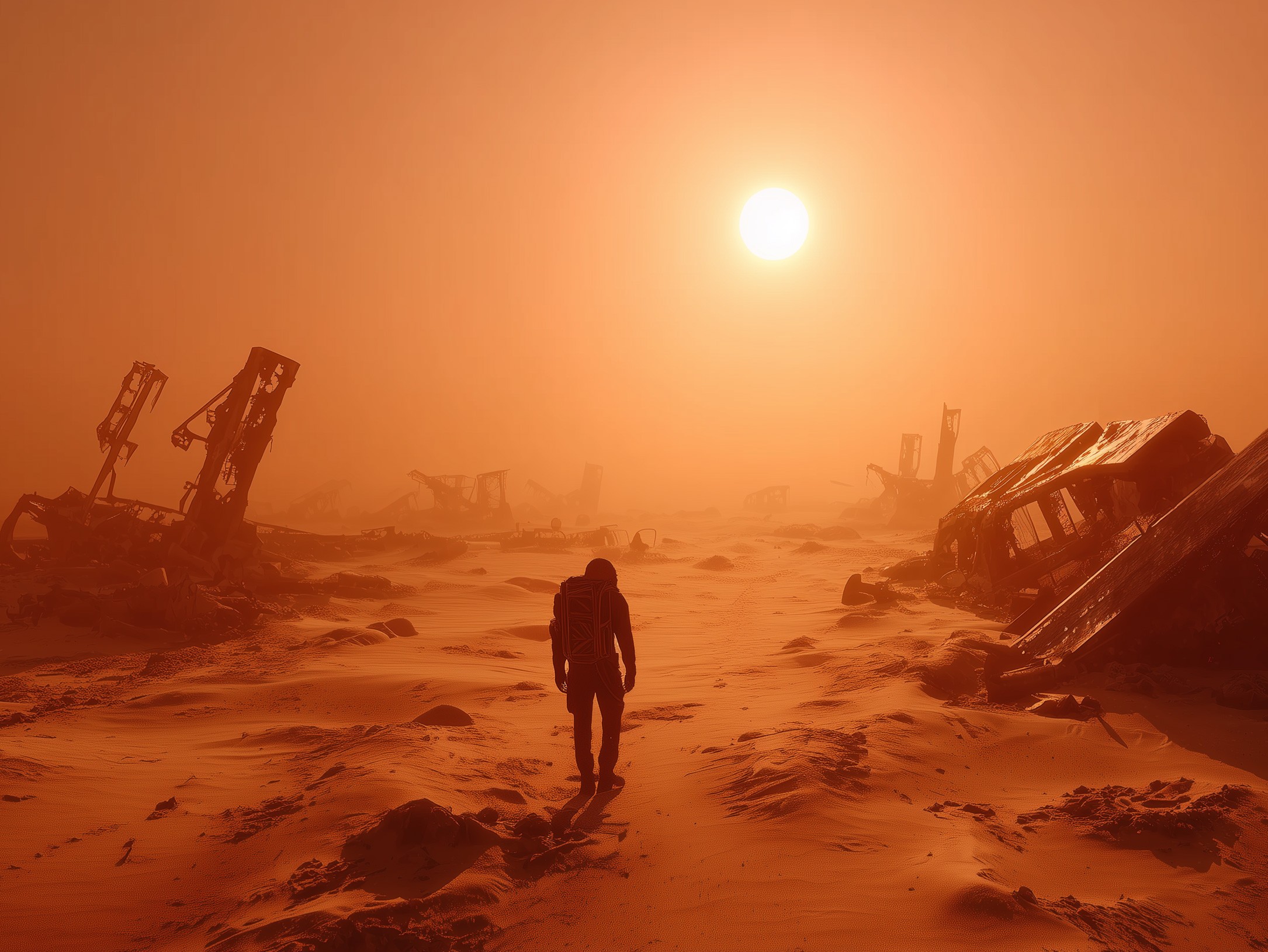
Project Overview
A 60-second teaser for a sci-fi short called "The Final Encounter". Every frame generated, every voice synthesised, every cue composed in software.
The argument the project makes isn't about what the tools can do. It's about what the tools still need.
Client
Personal
Role
Film direction
AI production
Art direction
Year
2026
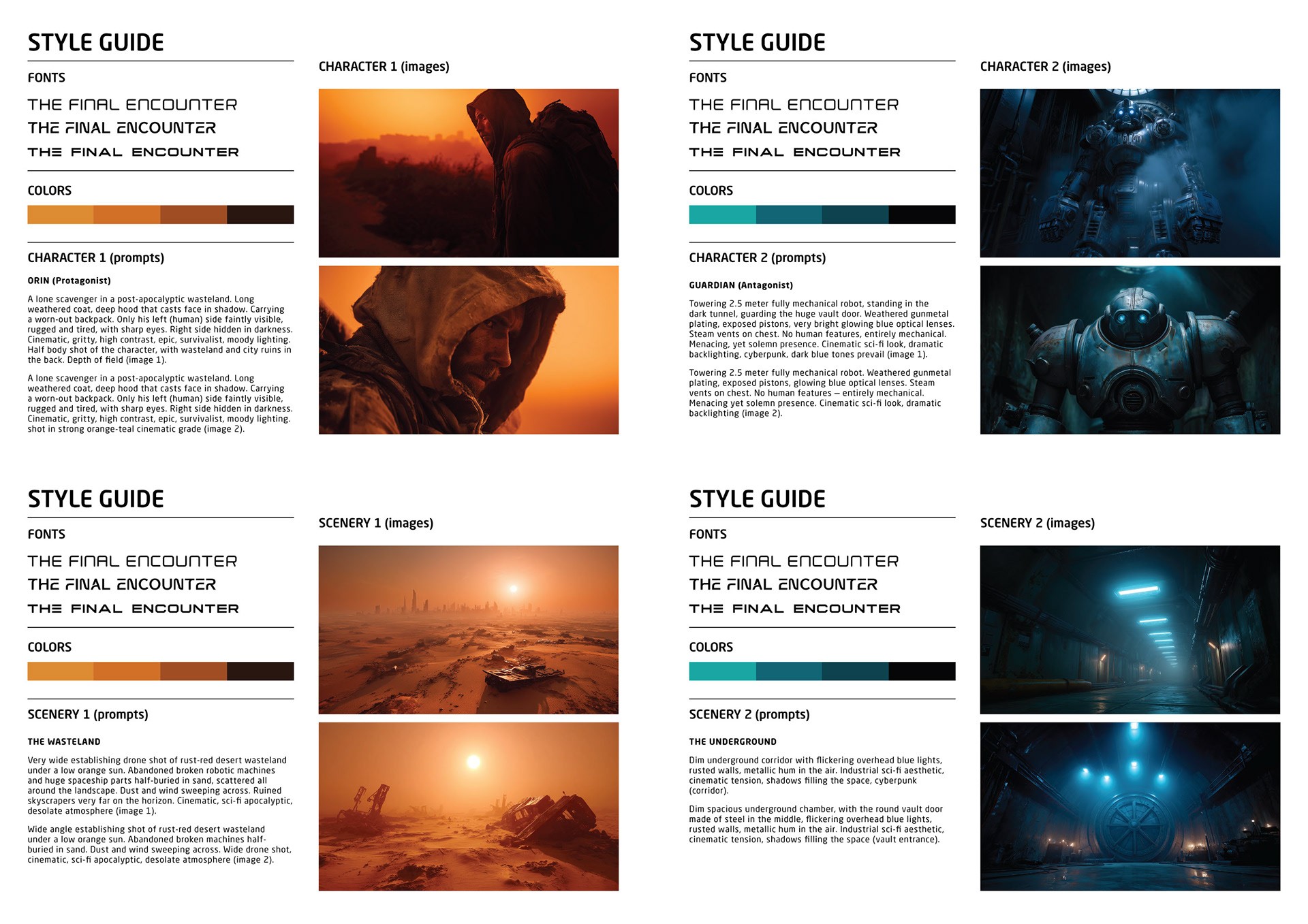

Argument
The conversation about AI in creative work in 2026 has mostly settled the wrong question. Can the tools generate convincing footage? — yes, they can, and they have for over a year. The question that's actually open is whether the discipline of creative direction still matters when the tools are this powerful. Whether concept, continuity, restraint, casting, tone — the things a Creative Director has always been paid for — still earn their place when any operator can produce a plausible frame in thirty seconds.
This project is a single piece of evidence in that argument. The teaser succeeds or fails on the same axes as a live-action piece: whether the world holds together across cuts, whether the protagonist feels like a person, whether the antagonist carries weight, whether the rhythm builds. The generation tools made the frames. The direction made the film.
Process
The work started where it would have started for any live-action piece — on paper.
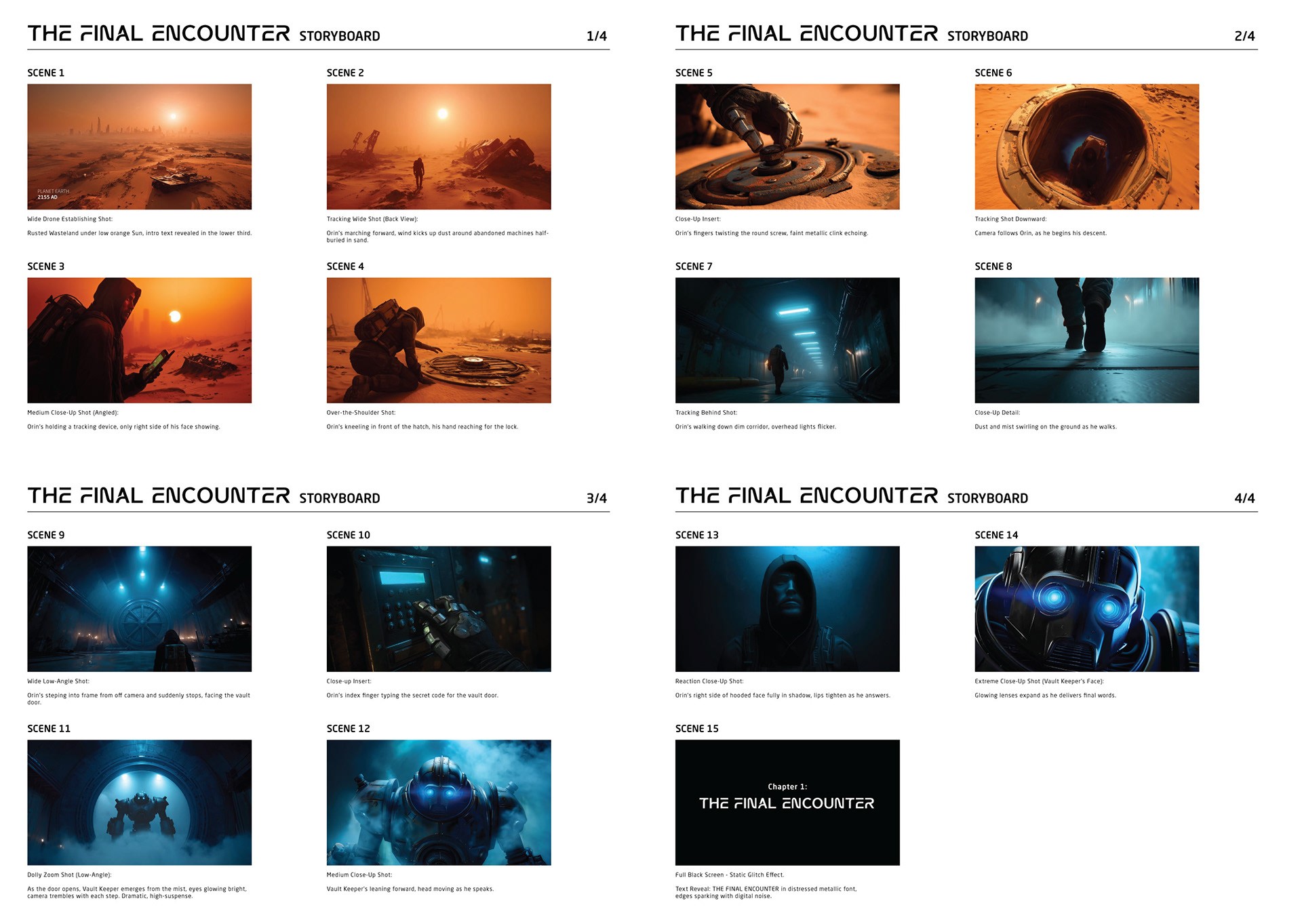
The Moodboard split the film into its two visual acts before a single prompt was written. The Wasteland (orange palette, survival register, exterior, sunlight) and The Underground (cyan palette, threat register, interior, fluorescent). Each act had its own colour swatch, character and scenery prompts — the same brief a Director of Photography and a Production Designer would have built together for a live shoot, just written for the receiving end being Midjourney instead of a crew.
The Shotlist locked the cut before the cut existed. Fifteen scenes, each with a labelled shot type — Wide Drone Establishing, Medium Close-Up Angled, Over-the-Shoulder, Dolly Zoom Low-Angle — and a one-line action description. Standard storyboard grammar. The discipline was that no scene got generated until the storyboard slot for it was decided. The Shotlist was the brief; Runway and Kling were the production.
In post, the work compressed back into traditional craft. Cuts, sound mix, voice timing, music edit, the title reveal — everything that turns generated frames into a film was done in Premiere, After Effects and Photoshop, the same way it would have been for any other 60-second piece.
The hardest part wasn't generating visuals. It was holding the protagonist's emotional register across fifteen scenes generated by a model that doesn't remember the previous frame. That problem doesn't get solved by better prompts. It gets solved by direction.
The Toolchain:
Script: ChatGPT, Claude
Stills: Midjourney
Video: Runway, Kling
Voice: ElevenLabs
Lipsync: HeyGen
Music: Suno
Edit: Premiere Pro, After Effects, Photoshop
Craft Notes
The skill the project asks for isn't tool fluency. Anyone can be tool-fluent by the end of a weekend. The skill is knowing what to ask for, in what order, and being willing to throw work away when it isn't quite right — the same instincts that separate a director from a generator.
The next phase of creative leadership will be defined by who can keep the discipline when the production friction is gone.