CrossFit Showcase
Project Overview
In 2022, CrossFit was the fitness conversation in Doha — the discipline every gym in the city was scaling up to deliver, every brand was pitching kit into, and every fitness influencer in the country was building a community around.
Sports Corner could have made a product spot. Instead, we made the film a global sports brand would have made for the same cultural moment.
This case study is a craft piece. No metrics, no sales numbers. The argument is the work.
Client
Sports Corner
Role
Film direction
Art direction
Sports
Year
2022

Context
The category for this kind of film is set by adidas, Nike, Under Armour or New Balance. Global brands with production budgets, in-house creative teams, and craft resources a Qatari retailer doesn't have. The point of this work was to make something that could sit inside that company without anyone flinching.
The production justification was the multi-brand structure. Fourteen athletes, seven male and seven female, paired by brand — adidas, Nike, Reebok, New Balance, Under Armour, Asics and Puma — each pair fully outfitted in one brand's kit, each pair bringing their own community to the campaign. That's how the project got greenlit. Each athlete's cut ran on their own channels into their own CrossFit community, doubling the campaign's distribution against the same production day.
The film itself had a different job. It had to argue, in pure craft, that Sports Corner belonged in the conversation. Not by claiming to. By showing up at the same register.
Decisions
The poem.
The voiceover is a mid-20th-century motivational text by Heartsill Wilson Sr. , spoken over the film instead of a track. Background music would have done what background music always does in fitness work — push the cuts forward, dictate the energy, drown the breath. The poem does the opposite. It slows the film down to the rhythm of someone speaking truth at you across a quiet room. The cuts have to earn their place against silence, not ride on a kick drum.
The Lighting.
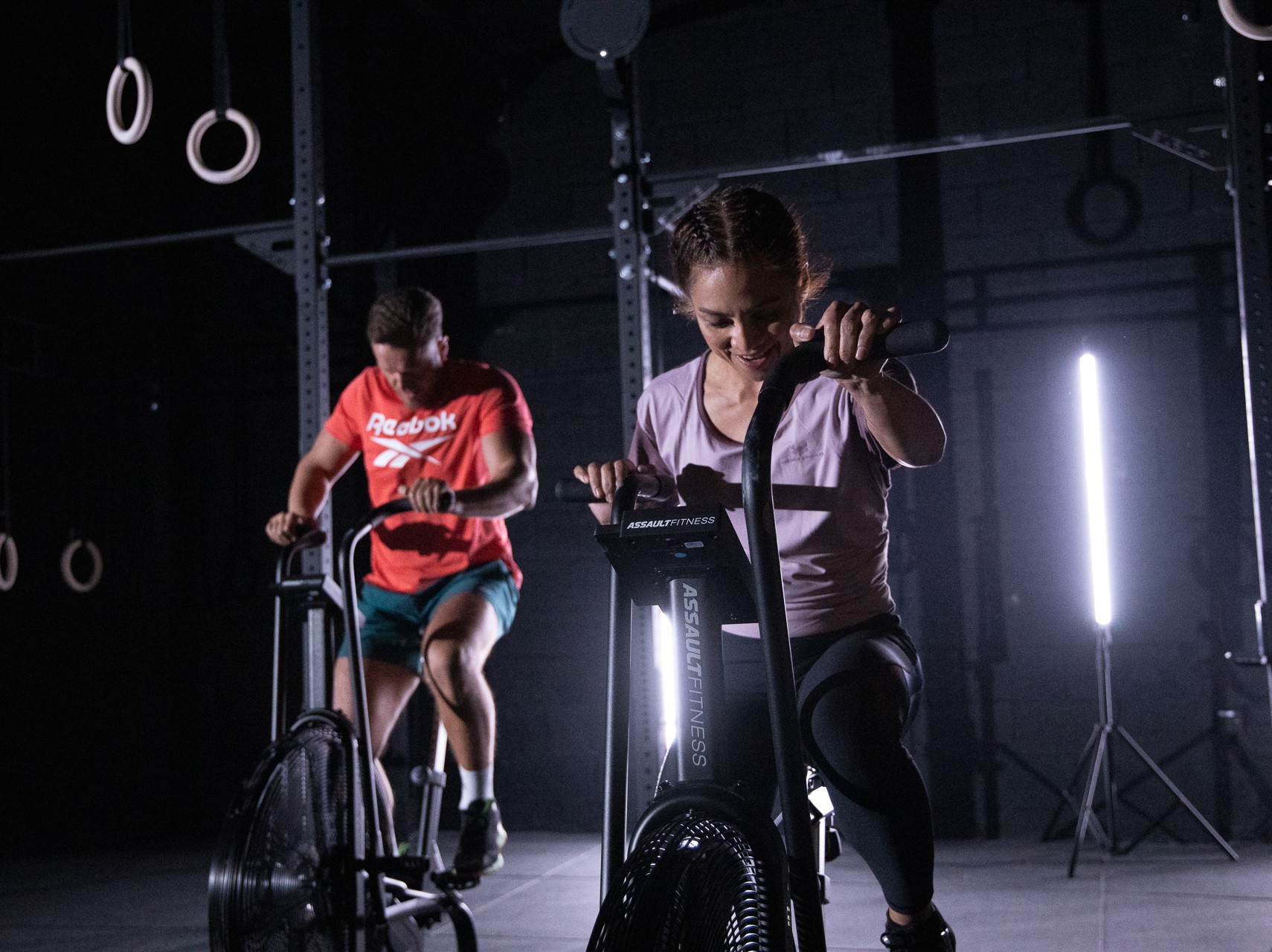
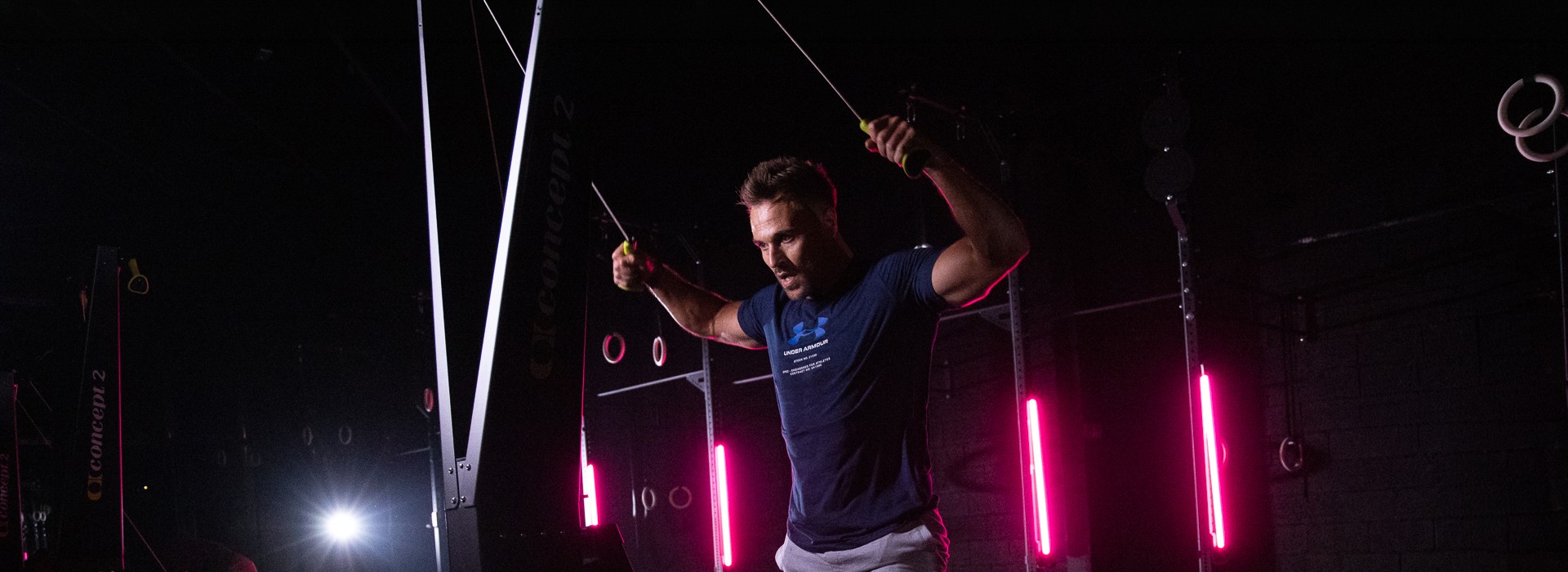
Three colours, held across the whole film: white, cyan, magenta. White for the cardio work — the bike rigs and rowers, anything sustained and rhythmic. Cyan for the strength work — the barbell and kettlebell lifts, the head-on hero shots, the focused effort. Magenta for the group sessions — the high-intensity finishers, the moments where the room was full and the energy was at its highest. The palette wasn't decorative. It was a colour script, picked at pre-production and held through the shoot, so every section of the film had its own emotional temperature without anyone having to spell it out.
The Haze.
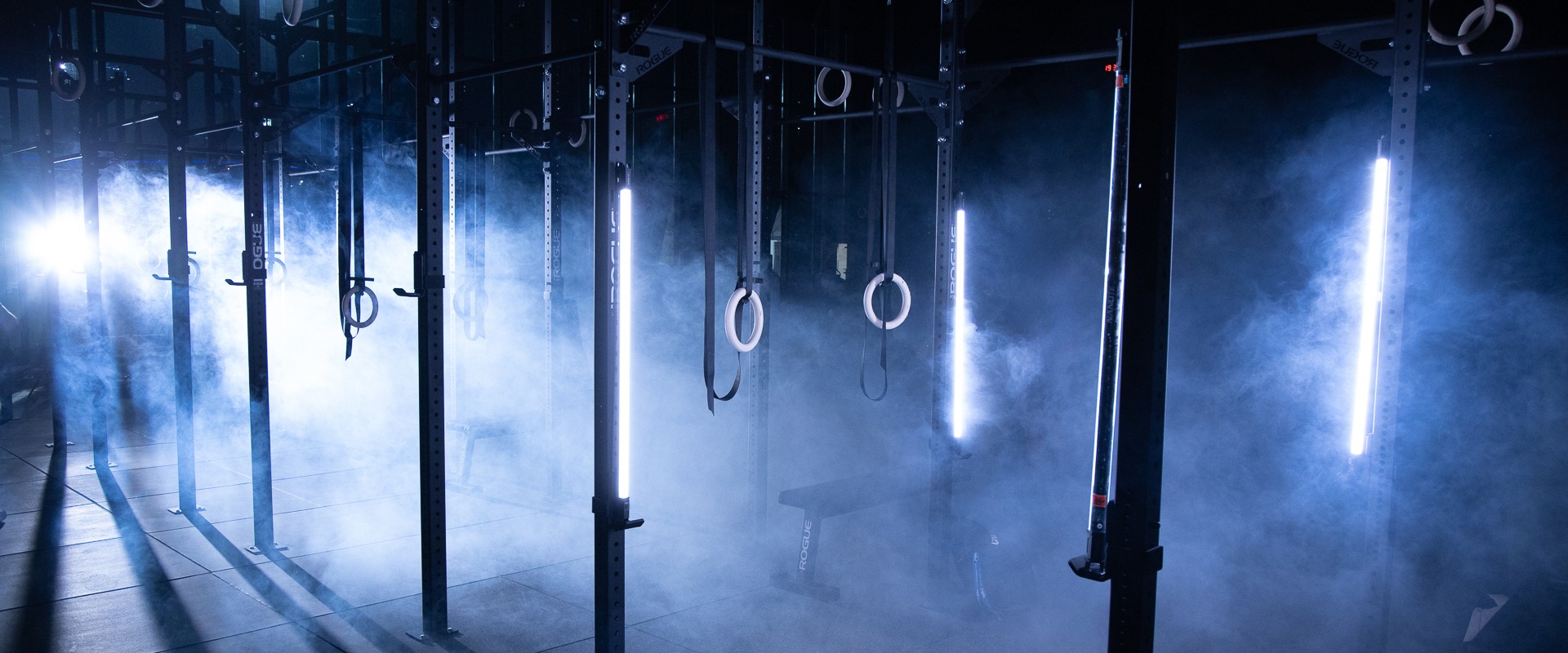
Fog is the easiest thing to overuse on a fitness shoot, and most films in this category make the gym disappear behind it. The discipline here was the opposite: haze as negative space. It isolates the figure against the rig, backs the silhouette, carves volume around the LED tubes. The athletes stay readable as athletes — you can see the form on the lifts, the position of the body, the equipment they're working with. The atmosphere doesn't replace the work. It frames it.
The Casting.
Real athletes, not models. Real muscle definition, real form on the lifts, real exhaustion on the faces between sets. The female athlete looking up between reps — that's the face of someone who actually trained that day, not someone who performed training for a camera. Casting for form rather than face is a quiet decision that the whole film depends on. A model can't fake a clean overhead position under load. An athlete doesn't have to.
The Cut.
The energy in the film isn't in the camera. It's in the cut. Each shot sits just long enough for the body to register, then cuts on the apex of the movement into the next shot's matching beat. A weight descending matches against a body rising. A sprint into a rowing pull. A barbell at peak overhead into a close-up of the arm holding it. The matches aren't visual — same colour, same equipment, same body — they're kinetic. Same point in the curve of effort, different bodies, different equipment, different lighting. The cut closes the gap.
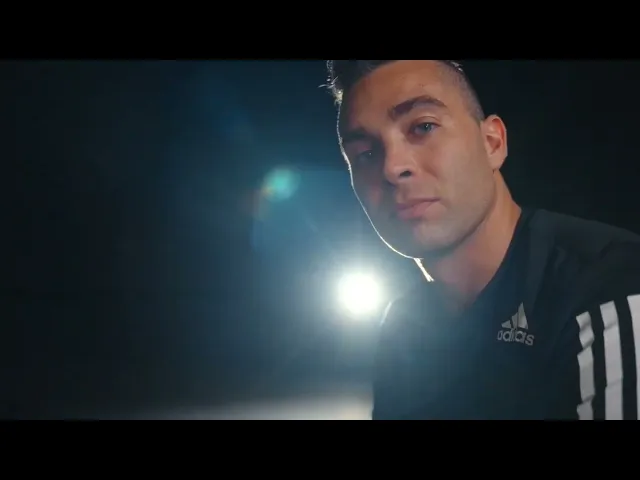
Between the action sequences, the film slows. The athlete looks down the lens in slow motion. The camera holds. The voiceover keeps running, undisturbed. Two rhythms in parallel — the fast cut for the body, the slow hold for the eye.
Craft Notes
A retailer can stock the brands. A retailer can advertise the brands. A retailer can run the same product shots the brands themselves run.
What a retailer doesn't usually do is make work that argues it belongs in the same conversation as the brands it sells. That conversation is made through craft — through the calibre of the production, the discipline of the colour script, the honesty of the casting, the restraint of the atmosphere. The thing a global sports brand spends millions of dollars and decades of institutional taste on, a local retailer has to make in one shoot, on a fraction of the budget, with a director who has to be a Creative Director, an Art Director, a Casting Director and a Colourist on the same day.
This film was that attempt. The work argues for itself. Watch it next to a Nike CrossFit film from the same year and judge.