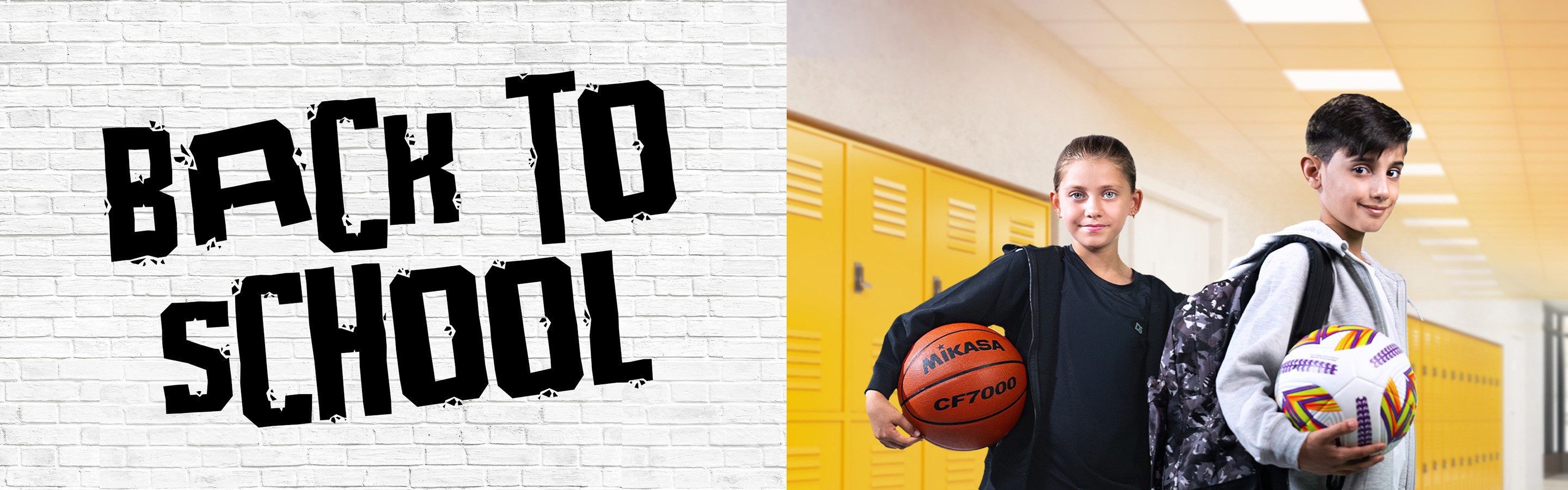
BACK to SCHOOL
Project Overview
Three years. Three structurally different creative approaches to the same seasonal brief. Three different production realities. One client who kept buying it back.
Most seasonal retail work goes stale by year three. The brief repeats, the budget repeats, and the campaign quietly turns into last year's campaign with a new colour palette. The hardest discipline in this kind of work isn't making one good piece. It's refusing to repeat yourself when the brief allows it — and finding the right creative grammar for the resources the year actually gives you.
Three Back-to-School campaigns for Sports Corner. The visual register reset every year. The audience watched harder every year. The smallest budget did the strongest numbers.
Client
Sports Corner
Role
Campaign direction
Multi-year
Retail
Year
2023-2025

Argument
Back-to-School is the most important seasonal window in Qatari retail — the campaign every parent, every kid and every competitor in the country is watching at the same time. It's also the one most likely to start cannibalising itself: every year the brief is "same window, same audience, more sell-through, fresh creative."
The decision I made coming into 2023 was that "fresh creative" would mean genuinely new every year — different visual system, different storytelling grammar, different production approach — not the same campaign in a new wrapper. Three years in, the data says the discipline paid off. So did the years that gave me less to work with.
Timeline
2023 — Pop-Art on live action
A mid-tier production. Comic-book overlay system — halftone panels, speech bubbles, hand-drawn SFX layered onto everyday footage of kids getting ready for school and showing up for sport. Two episodes — one at home and at school, one at the gym — built as a single continuous campaign that media could deploy in halves.
Watch episode 1: "From Home to School"
Watch episode 2: "At the Gym"
The pop-art layer was the brand's visual signature for the year. It also did real strategic work: the comic-book treatment let the campaign showcase every brand Sports Corner sells — adidas, Nike, Puma, DS — without any single brand reading as the hero. The stylisation was the equaliser. Sports Corner came out as the destination retailer where every brand lives.
Reach Views Clicks
2.10M 5.82M 146K
Meta, TikTok, Snapchat combined. Reporting available as total only.
2024 — Cinematic narrative
The biggest production of the three. The comic-book layer came off. The kid stepped forward as a protagonist. Two films, one boy on a football pitch, one girl on a basketball court — same structural template, two emotional palettes (neon blue for the boy, magenta-pink for the girl).
Both films opened on a cold-open future moment — a strike, a shot, suspended in slow motion — then cut to "one day before" and rewound through the morning routine, the school day, and the return to the court for the payoff. The brand stayed out of the frame until the closing offer card. The story did the work.
Watch film 1: "A Boy's Journey"
Watch film 2: "A Girl's Journey"
That was the trade. 2023 said "every brand lives here, look how loud." 2024 said "you build your story here. We'll stay quiet."
Reach Views Clicks
2.44M 8.14M 259K
Meta: 14.4M imp · 5.33M views · 222K clicks ; TikTok: 9.29M imp · 2.75M views · 30K clicks ; Snapchat: 1.35M imp · 56K views · 8K clicks
2025 — Format-agnostic, music-driven
The smallest budget of the three. No location. No story. No protagonist. No dialogue.
Less to spoil. Less to follow. Less to translate. More to watch again.
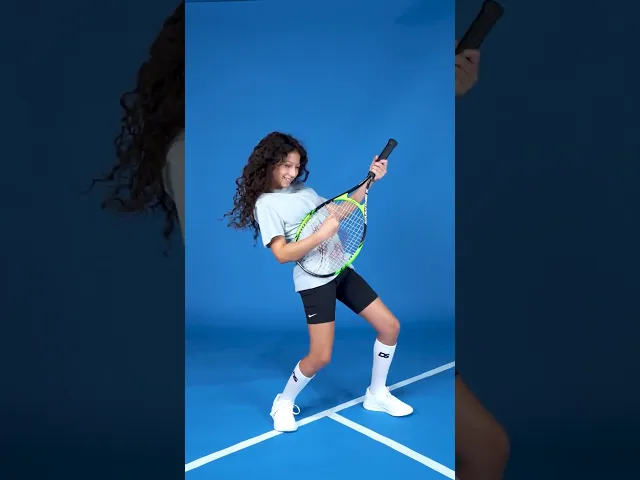
Each kid was cast for who they were rather than what they could perform. On the day, I directed them to play — not to act. Trendy pop music ran through the studio between takes to keep the energy up; the kids freestyled their sports against a dedicated colour seamless backdrops; the lens caught the moments where you couldn't tell where the direction ended and the kid began. In post, the cuts were locked to a single licensed track — a track that matched the energy already on the tape rather than imposing one. One song did the work two films and a fully scoped production had done the year before.
The campaign system that tied it all together was a hand-drawn doodle language — printed on foam-board, held up by hands at the end of the video, redrawn into the Key Visuals. One visual signature, every surface: TikTok, Reels, Snapchat, OOH digital, in-store.
There was nowhere for spend to hide, and the work is better for it. The smallest budget of the three delivered the strongest numbers of the three.
Reach Views Clicks
2.79M 11.76M 361K
Meta: 28.13M imp · 7.59M views · 268K clicks ; TikTok: 8.20M imp · 4.13M views · 87K clicks ; Snapchat: 465K imp · 43K views · 6K clicks
Craft Notes
Two things in the data are worth paying attention to.
The first is a number that's easy to miss. Each year, the same audience watched the campaign more times than the year before: 2.77 average views per person in 2023, 3.34 in 2024, and 4.22 in 2025. Three structurally different pieces, made for the same retail moment, three years running — and each one was more re-watchable than the last.
The second is harder to argue with. The smallest budget of the three, produced the strongest numbers of the three. 2025 reached more people, was watched more times per person, and delivered more total clicks than either of the bigger-budget years before it. That isn't a story about thrift. It's a story about matching the creative grammar to what the year actually gave us — and trusting that a piece with nothing to spoil and nothing to translate would travel further than a piece that depended on either.
You can reinvent a seasonal brief and lose the audience. You can hold the audience and stop reinventing. You can run the budget back every year, or run it down. The work most people don't get to see is the year you do all three at once.